A single photo of your face may soon be part of a medical workup. Researchers at Mass General Brigham built an AI tool called FAHR-Face that, per Medicalxpress, estimates a person's biological age and predicts cancer survival risk from one face image. Here is what that means in plain terms, what the tool is meant to do, and the questions worth asking if a clinic ever offers it to you.
What FAHR-Face Is
FAHR-Face is a foundation model, which means it was first trained on a very large pool of general data and can then be adapted to specific tasks. According to the report, this one was trained on more than 40 million face images. The team then used it to estimate biological age and to predict survival risk in cancer patients.
The researchers' argument, as Medicalxpress describes it, is that facial AI could help physicians assess frailty and personalize treatment, not replace clinical judgment.
Biological Age vs. Birthday Age
Your chronological age is the number of years since you were born. Biological age is an estimate of how old your body seems based on its condition. Two people who are both 65 can differ a lot in strength, resilience, and overall health.
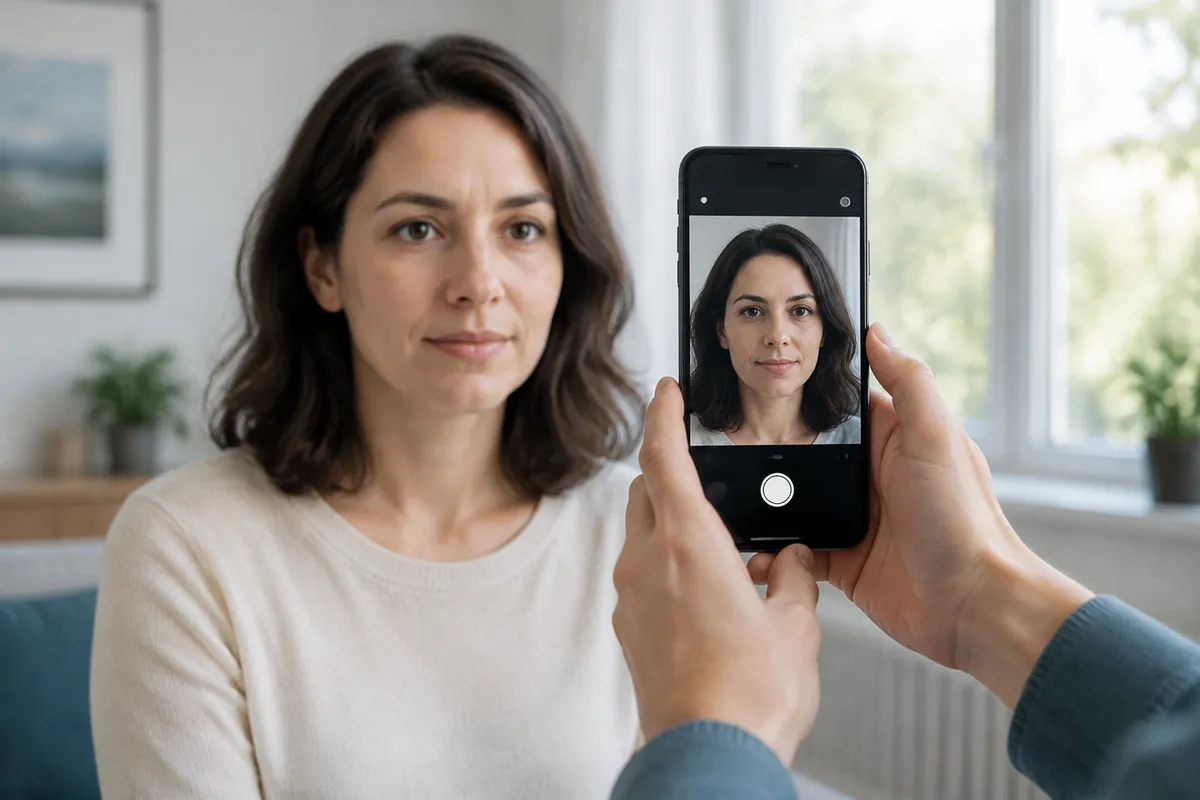
The idea behind tools like this is that the face carries visible clues about that difference. The AI looks at facial features in a photo and produces an estimate. You do not need to do anything technical for this to work; the input is just a picture.
I can only report what the coverage says here: it does not spell out which specific facial features the model relies on, so treat any claim about particular wrinkles or skin signs as unconfirmed.
Why Doctors Might Care
Cancer treatment is increasingly tailored to the individual. Some therapies are intense, and a doctor deciding whether a patient can handle them needs a sense of that person's physical reserve, often called frailty.
That assessment today relies on clinical judgment and various evaluations. A quick photo-based signal could offer one more data point, which is the use the researchers describe. It is an addition to the doctor's picture of you, not a verdict.
What It Does Not Mean
- It is not a diagnosis. A survival-risk estimate is a statistical prediction about groups of patients, not a forecast for one person.
- It is not a replacement for your doctor. The researchers frame it as support for clinical judgment.
- It is not something to try with a consumer app. Nothing in the report says a selfie app can give you a meaningful health reading. Be skeptical of any app claiming to.
The Privacy and Bias Questions
This is where my own analysis comes in, since the coverage presents the promise and these concerns are the obvious counterweight. A face photo is personal data, and using it for health prediction raises questions any patient is entitled to ask:
- Where is the photo stored, and for how long?
- Who can see the result? Could it reach insurers or employers?
- Was the model tested on people who look like me? Face-based AI can perform unevenly across ages, skin tones, and backgrounds, so it is fair to ask how it was validated.
- Can I decline? Consent should be clear, and declining should not affect your care.
- How will the result be used? A tool that informs a conversation is very different from one that quietly steers decisions.
These are reasonable questions, not accusations; the report does not say any of these problems have occurred.
How to Protect Your Own Face Data Now
You do not need a hospital tool to take sensible steps today on your phone or computer:
- Check photo permissions. On iPhone, open Settings, then Privacy & Security, then Photos. On Android, open Settings, then Privacy, then Permission manager, then Photos and videos. Remove access from apps that have no reason to see your library.
- Review what you share publicly. Public profile photos are easy to collect. Set social accounts to private where you can.
- Read consent forms. If a clinic or study asks to photograph you, ask in writing how the image will be used and whether it can be deleted.
- Be wary of "age scanner" apps. Many request camera and library access and may keep your images. Check the privacy policy before uploading.
The Takeaway
Face-based health AI like FAHR-Face is a research tool aimed at helping doctors judge frailty and tailor cancer care, with the physician still in charge. If one ever points a camera at you, ask what happens to the photo, how the model was tested, and how the result will be used before you say yes.