AI can now hand you answers faster than you can check them. A recent debate in mathematics shows what to do about it: stop treating the answer as the finish line, and start treating understanding as the real work. By the end of this piece, you'll have a simple routine for "digesting" anything an AI gives you, whether it's a proof, a spreadsheet formula, or a research summary.
What happened in mathematics
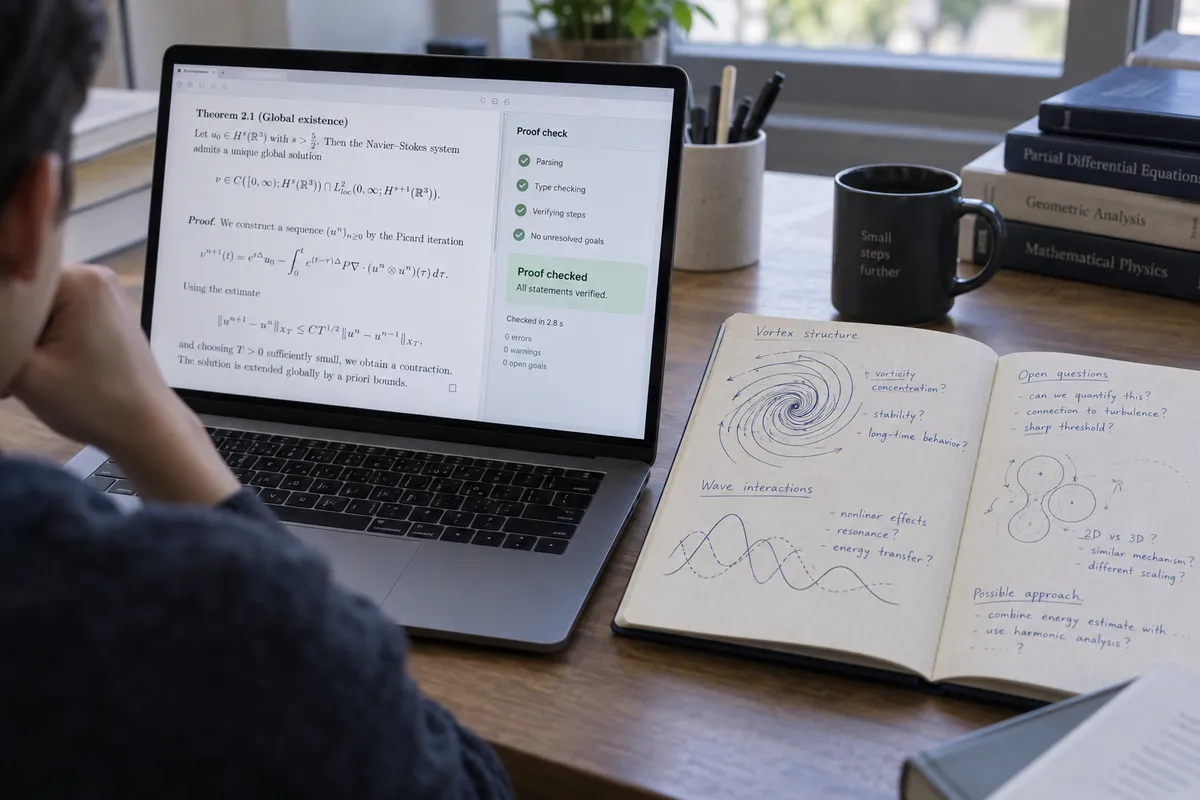
Per a report from Phys, mathematics is having something like an existential crisis. The description of the piece says that on Nov. 20, 2026, a mathematician at the AI company Anthropic claimed that while working with the model Claude, he had solved the generalized Riemann hypothesis. That is a claim, and the report frames it as one. I can't tell you whether it holds up, and the article's larger point is that this question itself is the problem.
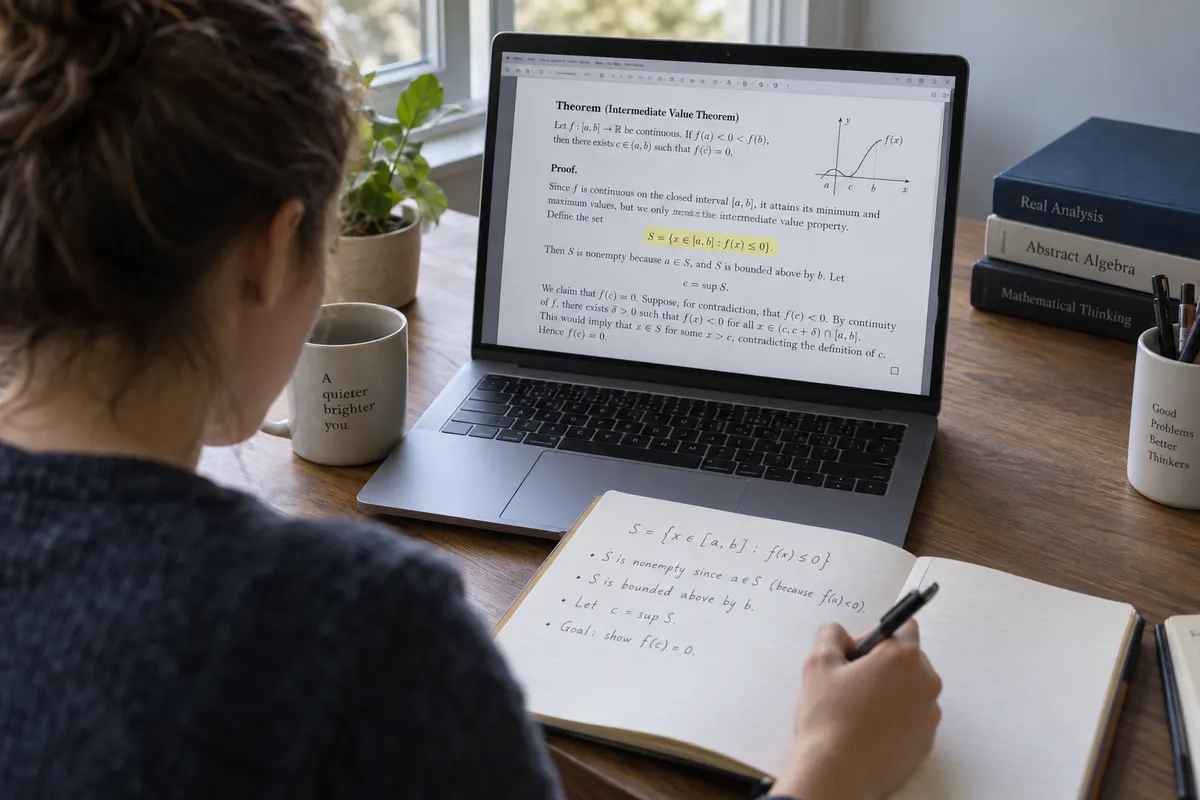
The piece argues that mathematics is shifting from valuing "solving" toward valuing "digesting": understanding, simplifying, and applying proofs. It also notes that recent advances from Anthropic and OpenAI suggest models can produce math at a scale and speed humans cannot easily verify or understand.
You probably aren't proving famous conjectures. But you are likely receiving AI output you can't fully check. The same shift applies.
Why a big answer isn't a usable answer
The source article points to a striking scenario: a proof so large, on the order of 250,000 pages, that no person could realistically read it. An answer like that may be correct and still be useless to people. Nobody can trust it, teach it, or build on it.
Scale that down to your life. An AI-written 40-line spreadsheet formula, a long summary of a contract, or a block of code can fail the same way. It looks right, it runs, and you have no idea why. When something breaks later, you can't fix it.
A practical digesting routine
These steps work in any chat assistant, on a phone or computer. They aren't from the Phys article; they're my way of applying its idea.
Step 1: Ask for the short version
After you get an answer, type: "Explain this in five sentences for someone with no background." If the assistant can't compress it cleanly, that's a warning sign that you or it don't understand the core idea.
Step 2: Ask what would make it wrong
Type: "What assumptions does this rely on, and what would break it?" This surfaces the weak points you'd otherwise discover the hard way.
Step 3: Test it on a small case
Run the formula on three rows of data you can check by hand. Try the code on an input where you already know the output. Small tests catch a surprising number of errors.
Step 4: Say it back in your own words
Write two sentences explaining the result without looking. If you can't, you haven't digested it yet. Go back to Step 1.
Step 5: Decide where it's safe to rely on it
Low stakes, such as a party playlist or a meal plan, can tolerate a quick glance. High stakes, such as money, health, or legal matters, deserve independent verification from a qualified person or a second source.
The MRI example: why human insight still matters
The article uses compressed sensing in MRI as an example of why human understanding matters. As the report for the piece describes it, the point is that the human side of mathematics, understanding an idea well enough to simplify it and apply it, is what turns a result into technology people use. A result nobody can explain doesn't travel from paper to hospital.
That's the takeaway for everyday users too. The value isn't in having an answer; it's in being able to explain what it means and why it matters.
What it means for learning
The article raises hard questions about research, Ph.D. training, and education as AI begins to automate once-prestigious intellectual work. It also invites a comparison to the calculator: does AI free students or weaken them?
I don't think there's a settled answer, but the calculator comparison suggests a useful rule for your own learning. Use AI to skip the tedious part only after you understand what the tedious part was doing. If you're learning something new, try the problem first, then ask the AI to check your work, rather than the other way around.
A quick rule for students and parents
- Attempt first, even badly.
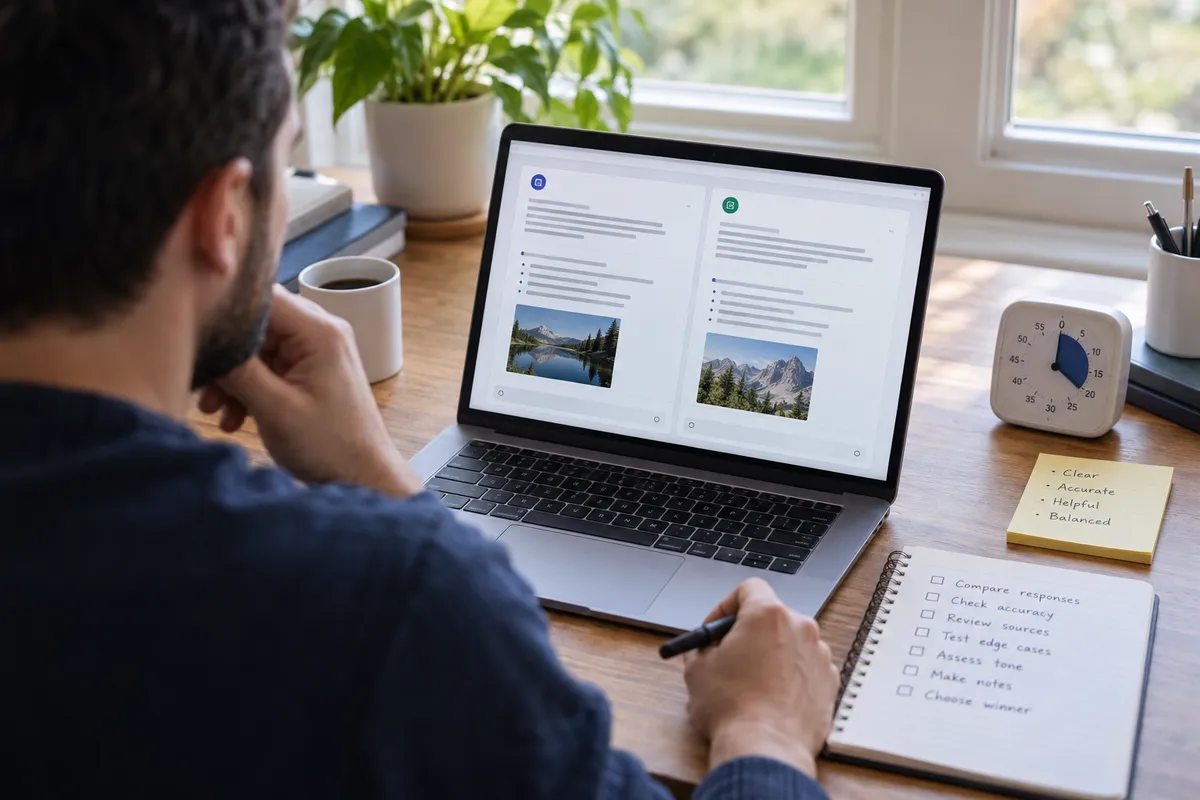
- Use AI to compare, critique, or explain a different approach.
- Finish by teaching the idea back, to a person if possible.
Where this is heading
The Phys piece connects math's disruption to what may be coming for science, education, coding, and creative work. That's the article's framing, and it's a reasonable one to keep in mind. As AI output grows, the scarce skill won't be producing answers. It will be judging, explaining, and applying them.
The next time an AI gives you something impressive, don't stop at "it works." Spend five minutes making it yours: shrink it, question it, test it, and explain it back.