A fake Jon Bon Jovi account on Instagram used AI-generated videos to build trust with a Louisiana woman over months, and she lost more than $10,000, nearly costing her home, according to Fox News. By the end of this guide, you'll know the specific red flags that give a celebrity DM away, and exactly what to do the moment one shows up in your inbox.
The woman, Leslie Pickett, is a reminder that this isn't about being gullible. Scammers are using AI video to make an old trick feel new and personal.
What happened to Leslie Pickett
Per Fox News, Pickett was drawn into a months-long romance scam by an impersonator posing as Jon Bon Jovi. The scammer used messages, videos, and requests for payments tied to fake meet-and-greet events. Over time, she lost more than $10,000.
The story also features National Geographic's "Super Scam Me," which, per the report, investigates how romance scammers use emotional manipulation and generative AI.
The key lesson: the scam worked because it was slow. Months of attention build real feelings, and real feelings make people explain away warning signs.
Red flag 1: A celebrity contacts you first
Famous people rarely message fans out of the blue, and almost never keep up a private, ongoing relationship with one. If a star's account starts a conversation, treat it as suspicious by default, however flattering it feels.
What to do: Open the account's profile and look for the blue verification badge, but don't rely on it alone, since lookalike accounts are easy to create. Check whether the star's official website or other confirmed channels link to that exact account.
Red flag 2: The video feels personal but slightly off
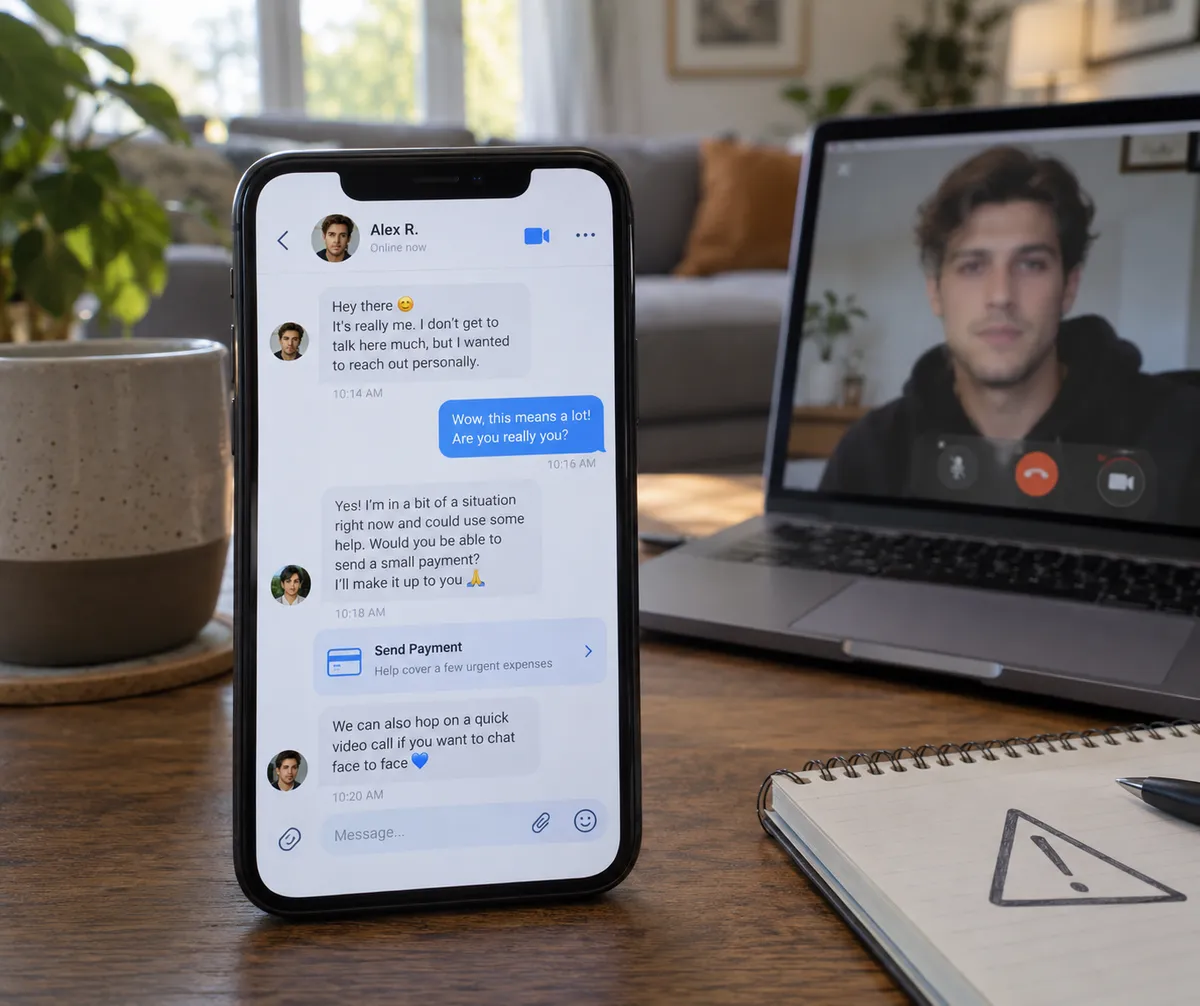
AI video tools are making impersonation far more convincing, and deepfakes are no longer easy to spot by eye. Don't rely on spotting glitches. Instead, judge the situation around the video.
Ask yourself:
- Is the video short, generic, or vague about details only a real friend would know?
- Does it avoid live interaction, such as a real-time video call where you pick what they say?
- Does it arrive right when the "relationship" needs a push toward a request?
A polished video proves nothing. Treat video as no more trustworthy than text.
Red flag 3: Any request for money
This is the clearest signal, and the one that should end the conversation. In Pickett's case, the payments were framed as meet-and-greet costs. A real celebrity doesn't need you to personally wire money for access to them.
Payment method matters too. Requests for crypto, gift cards, or wire transfers are classic scam warning signs because they're hard to reverse. If someone you've never met in person asks for money by any of these routes, stop.
Red flag 4: The relationship moves fast and stays private
Romance scams groom victims gradually: daily messages, affection, special treatment, then a request. Watch for pressure to keep things secret or to move to a different app. Isolation protects the scam.
What to do right now if you get a suspicious DM
- Stop replying. Don't argue or test them; scammers adapt.
- Take screenshots of the profile, messages, and any payment instructions.
- Report the account in Instagram: tap the three dots on the profile, choose Report, and follow the prompts for impersonation or scam.
- Block the account after reporting.
- Don't send more money, even to "fix" a problem or recover earlier payments. Follow-up requests are a common tactic.
- Contact your bank or payment provider immediately if you've already sent money, and consider reporting to your local fraud authority.
These steps work in the current version of the Instagram app on iPhone and Android, though menu labels can shift slightly between updates.
How to talk to someone who may be caught in one
If you suspect a friend or relative is being scammed, lead with care, not correction. Telling someone they're being foolish usually makes them defend the scammer.
Try this instead:
- Say you're worried, not that they're wrong.
- Ask open questions: "Have they ever offered to video chat live?"
- Share that AI video can now fake a famous person convincingly, so the video isn't proof.
- Offer to help check the account together.
Smart people fall for these scams because the emotional manipulation is real, even when the person isn't. Keeping shame out of the conversation keeps the door open.
The one rule to remember
If someone you've only met online asks you for money, no video, voice, or sweet message should change your answer. End the conversation, report the account, and talk to someone you trust before you send anything.